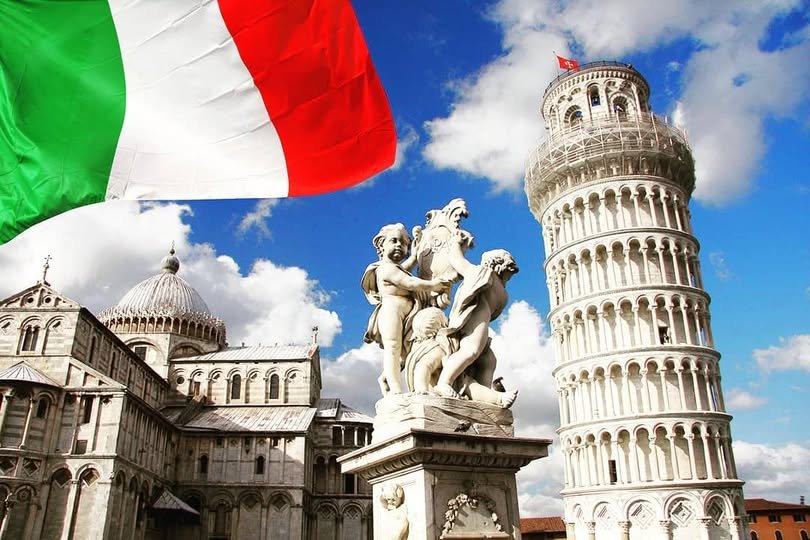
Italy is a member country of the EU since January 1, 1958 with its geographic size of 302,073 km², and population number 60,795,612, as per 2015. The Italians comprise 12% of the total EU population. Its capital is Rome and the official language in Italy is Italian. The Gross Domestic Product (GDP) is €1.636 trillion, as per 2015. Italy's currency is Euro (€) since it became a member of the Eurozone on January 1, 1999. The political system is a parliamentary republic. Italy holds 73 seats in the European Parliament and held the revolving presidency of the Council of the EU 12 times between 1959 and 2014. Italy is a member country of the Schengen Area since October 26, 1997.
EU
Citizenship & Residence
Government Programs of the European Union
Strategic Framework Covering the 27 EU Member States
In strict compliance with the transnational regulatory protocols synchronized across the 27 EU Member States, our global network implements secure administrative avenues for qualified international allocators and cross-border commercial branches. These customized residence and investment frameworks provide legal status card approvals, granting full liberties to operate commercial facilities, manage assets, and navigate borderless travel networks across the Schengen Zone registry.
Section 16.2 — Italy – A Hot Spot for Foreign Investment
Italy is one of the key players in the EU (European Union). Italy is known for its rich cultural and historical heritage. Italy, officially known as the Italian Republic is in the south of the Central European Continent. The country shares its border with several countries in the Northern region including Austria, France, Slovenia and Switzerland. With over 60.4 million inhabitants (approx. figures) residing in the country, Italy is the fifth most populated country in European continent, and it is the 23rd most populous country in the world.
Italy's capital city of Rome occupies a significant place in the history for its cultural significance. The city has been an important political centre of western civilization during the Roman Empire rule. Since the fall down the Roman Empire and after facing the two most deadly wars in the Human history (Both world war I and II), the face of Italy has changed radically. The modern-day Italy is a Democratic Republic; it is currently ranked 23rd in the most developed countries in the world list. Italy is ranked amongst the top 10 countries in the world for its high standard of living and quality of life index.
Italy is one of the founding members of the European Union and it also part of the Eurozone. Italy is also one of the key members of G8, G20 and NATO and other important international organizations. Today the Economy of Italy is experiencing a boom rapidly. Italy is the sixth largest economy in the world Italy has become one of the key destinations in the EU for foreign investment.
Section 16.3 — Foreign Direct Investment Policy in Italy
The Italian Government, focused on regional development and employment creation, implements equal-rights guarantees alongside targeted sovereign assistance blocks:
• Mandatory Equalization Rule: With a view to attract foreign investment in the country, the Federal Government of Italy has laid down a mandatory rule that it would discriminate between the benefits and incentives granted to the foreign investors and the local investors. This is a huge initiative taken by the Italian government to attract foreign investment in the country.
• Sovereign Assistance Parameters: The Italian Federal Government provides various benefits to the foreign investors in terms of tax benefits, investment loans at discounted rate of interest, state guarantee for exporters and other financial aid.
The Italian government grants financial assistance to the foreign investors depending on the geographical location of the investment, the size of the investing company and the sector in which the company is investing.
Italy offers significant FDI incentives, including 10-year tax exemptions in specific high-unemployment southern regions, making it a preferred EU destination. Investors exceeding average five-year investment levels can claim deductions on excess capital.
• Maximum Benefit Cap: Financial incentives are generally capped at 50% of taxable income.
• Geographical Asset Grants: Regional grants for fixed assets can reach up to 65% of the investment.
Section 16.5 — Key Sectors for Foreign Investment in Italy
Diverse sectors offer high returns for foreign investors, with real estate and tourism showing significant potential.
🏢 Real Estate Industry Framework
Driven by high homeownership rates and demand for second homes, the Italian real estate market provides stable, long-term returns. Increasing value and investment from both locals and foreign residents make it a robust sector.
🍕 Tourism Sector Horizon
As a premier global destination, Italy offers investment opportunities in both major historic cities and new, developing coastal infrastructure projects.
attract tourists from all around the world, recently lesser-known cities like Tuscany and Cinque Terre are attracting influx of tourists.
The increase in tourism has opened up several avenues for foreign investment in the sector. Several foreign investors are increasing into new tourism sectors such as agri-tourism and eco-tourism. Investors are investing in acquiring and building property to provide accommodation facilities to the tourists.
Section 16.7 — Food Industry & Restaurant Enterprise Opportunities
The Italian food and restaurant sector offers significant investment potential, driven by high appreciation for local cuisine. Data indicates food is a primary consideration for tourists, creating opportunities in the hospitality and culinary sectors. Strategic acquisitions of existing, reputable restaurants provide strong ROI potential.
With a favorable FDI policy and opportunities in varied sectors, Italy represents a high-potential market for foreign investment.
To qualify for the sovereign Italian Golden Visa framework, non-EU third-country nationals must execute capital placements under explicit asset tiers. All assets must be maintained in Italy for the entire duration of the residence permit’s validity:
🚀 Italian Innovative Startup Track:€500,000 minimum allocation
🏢 Italian Limited Company (S.r.l. / S.p.A.) Track:€1,000,000 minimum allocation
🕊 Sovereign Philanthropic Initiative Donation:€1,000,000 minimum donation
🇮🇹 Italian Government Treasury Bonds (BTP):€2,000,000 minimum purchase
⚠️ Critical Asset Constraint: Direct property or real estate investment is strictly NOT allowed under this specific investor visa scheme.
Section 16.9 — Procedural Entry Workflow & Nulla Osta Milestones
Filing compliance requires strict adherence to centralized government administrative clearings prior to landing on Italian territory:
Milestone 1: The Nulla Osta Clearance
Third-country nationals from outside the EU must first apply digitally and receive a formal Nulla Osta (Certificate of No Impediment) issued directly by the Ministry of Economic Development committee.
Milestone 2: Consular Visa Issuance
After receiving the clearance certificate, you must present yourself at the Italian Embassy in your country of residence within exactly 6 months to apply for the initial 2-year physical investor visa stamp.
Section 16.10 — Article 24-bis Flat-Tax Scheme for Non-Domiciled Residents
To attract global human and financial capital from abroad, Italy’s Budget Law for 2017 introduced groundbreaking fiscal privileges. Governed strictly under Article 24-bis of Italy's Tax Code (TUIR), this optional tax regime allows incoming residents to completely substitute standard progressive income taxation on their entire wealth generated outside the Italian territory.
The framework executes via a single annual flat-fee payment layout:
💵 Lump-Sum Annual Flat Tax: An absolute fixed payment of €100,000 per year, which must be fully cleared in one single instalment by 30 June of each fiscal year.
Extended Family Inclusions: The primary investor can seamlessly extend this flat-tax substitution umbrella to cover core family dependents. This is executed by adding a localized payment surcharge worth an additional €25,000 per year for each dependent included in the tax dossier.
Sovereign Fee & National Fiscal Tariff Matrix
Section 16.11 — Mobility & Investment Registration Dues
Interbest International Investment Company Registration Fee:€3,500
Standard Corporate Company Registration Cost:€3,000
Physical Office Space Registration:€250 / month
Value Added Tax (VAT / IVA) Standard Rate:22%
The Base Corporate Tax Rate in Italy Baseline:24%
Section 16.13 — Intracommunity Partita IVA Identification Registry
For compliant corporate operations, B2B sales routing, and product logistics within the European Economic Area, commercial entities require a fully verified, valid intra-community Value Added Tax string (Imposta sul Valore Aggiunto / Partita IVA).
If an incorrect or unmapped tax number is provided, financial channels will halt under the official Italian tax administration notice: "IMPOSTA SUL VALORE AGGIUNTO - Il numero di partita IVA da voi comunicato non risulta essere corretto. Al fine di dichiarare correttamente le cessioni verso i Paesi dell'Unione Europea dobbiamo essere in possesso del pertinent numero di partita IVA ad 11 cifre rilasciato dal Ministero delle Finanze, Centro Informativo Tasse, Via Mario Carucci 99, -00100 - ROMA. Vi preghiamo, pertanto, di verificare il numero di partita IVA da voi comunicato e di riportare il corretto codice nello spazio di seguito predisposto. Si prega, infine, di far pervenire quanto richiesto con la massima sollecitudine. Nel ringraziarVi per la collaborazione, porgiamo distinti saluti." Immediate internal audit and formal digital submission of the corrected alphanumeric block are required to resume valid clearance pipelines within the European Community parameters.
Section 16.14 — Alphanumeric Sequence Rules of the Italian Partita IVA
The Ministry of Economy and Finance (Centro Informativo Tasse) strictly regulates the sequence formatting and configuration rules of business tax identifiers:
• The tax registration identifier block must consist of the sovereign country prefix followed by exactly 11 digits («partita IVA ad 11 cifre»).
• The identifier sequence always begins with the uppercase country prefix code 'IT'.
Per: _________________Da: _________________
IMPOSTA SUL VALORE AGGIUNTO
IT
Porgiamo distinti saluti.
Section 16.15 — Corporate Income Tax System (IRES & IRAP)
Corporate tax rates in Italy 24%. The tax rate is x (IRES) rate is 24%.
Italian corporate entities are subject to a corporate income tax, known as imposta sul reddito sulle società or IRES, and to a regional production tax, known as imposta regionale sulle attività produttive or IRAP. The standard applicable rates are structured as follows: 24% for IRES. 3.9% for IRAP.
National Corporate Income Tax Rate (IRES):24.00%
Regional Production Tax Rate (IRAP Standard):3.90%
Section 16.16 — Value Added Tax (IVA) Classifications
Italy VAT rates: The statutory tax codes of the Italian Republic separate consumer commodities, domestic services, and cross-border trades across five distinct core rate percentage tiers:
22% Standard Base Rate
Rate Type Which goods or services 22%Standard All other taxable goods and services.
10% Reduced Rate Tier
10% Reduced Some foodstuffs; water supplies; some pharmaceutical products; domestic passenger transport; admission to cultural events; some social housing; renovation and repair of private dwellings; some construction work on new buildings; some supplies of new buildings (non-luxurious); some agricultural supplies; hotel accommodation; restaurants; admission to certain sports events; energy products (excluding district heating); firewood; collection of domestic waste; some waste water treatment; alcoholic beverages in bars and cafes; take away food; cut flowers and plants for decorative use and food production.
5% Reduced Rate Tier
5% Reduced Some foodstuffs; some social services; certain passenger transport.
4% Reduced Rate Tier
4% Reduced Some food products; certain medical equipment for disabled persons; certain books; newspapers and some periodicals; e-books with an international standard book number (ISBN); online journals newspapers; TV license; some social housing; some agricultural supplies; certain social services; motor vehicles for the disabled; construction work on new buildings (for first housing); supplies of new buildings (for first housing).
0% Zero Rate Tier
0% Zero Intra-community and international transport.
Italy Company Setup Fees & Statutory Frameworks
The global migration and corporate advisory framework managed by our team provides direct, legally credentialed pathways to structure business operations and secure residency footprints inside the Italian jurisdiction.
Section 16.17 — Commercial Setup Paths & Covered Service Tonnage
Our firm systematically handles all necessary document formatting, background credential vetting, and authority coordination under a transparent, fixed fee schedule matching your target entity selection:
Traditional Private Limited Liability Company (Traditional S.r.l.) — €4,000
Complete legal counsel, blueprint drafting (Memorandum, Articles of Association, and Powers of Attorney), opening a local tax profile (Codice Fiscale), and full notarial deed coordination. All out-of-pocket notary disbursements, stamp duties, registration taxes, VAT applications, and banking setup assists are 100% included.
Simplified Private Limited Liability Company (Simplified S.r.l.) — €3,000
Vetting of background credentials, drafting standard corporate memorandum structures without custom amendments, registration with the local Chamber of Commerce, VAT activation, bank configuration, and full coverage of standard notary costs and stamp duties.
Corporate Branch Office (Open a Branch) — €5,000
Strategic cross-border structure consulting, translating international parent company resolutions, processing foreign documentation through certified conduits, filing applications with the Italian Business Register (Registro delle Imprese), corporate VAT setup, and covering all public notary expenses, stamp duties, and branch registration taxes.
Representative Office (Ufficio di Rappresentanza) — €3,500
Legal establishment guidance for auxiliary, promotional, and market research tracks. Includes drafting parent entity authentication paperwork, registering the local representative to secure a Codice Fiscale, and managing entries with the Chamber of Commerce alongside commercial bank setup actions.
Innovative Start-up Company — €5,000
Advanced legal counseling to leverage state startup tax incentives. Covers drafting technological business models, filing applications for immediate enrollment within the Special Section of the Italian Business Register, digital incorporation workflows, VAT registration, and matching notary/stamp disbursements.
Open a Sole Proprietorship (Ditta Individuale) — €1,300
Vetting legal identity data, drafting structural onboarding documents, managing structural corporate VAT applications, and registering the sole proprietor directly with the Italian Business Register.
Open a Limited Partnership (Società in Accomandita Semplice - S.A.S.) — €3,000
Vetting limited partnership frameworks, corporate VAT activation, executing the partnership deed before an Italian public notary, assigning tax identification profiles, filing with the Chamber of Commerce, and covering notary fees, stamp duties, and registration taxes.
Open a General Partnership (Società in Nome Collettivo - S.N.C.) — €3,000
Drafting corporate documents, securing the Codice Fiscale for all partners, executing the partnership deed with a public notary, corporate VAT application processing, and registering the entity with the local Chamber of Commerce with all stamp and notary out-of-pockets covered.
Open a Simple Partnership (Società Semplice - S.S.) — €3,000
Vetting data for non-commercial asset holding or agricultural frameworks, securing tax IDs, executing the social contract with a public notary (if requested), registering with the Italian Business Register, and paying all state stamp duties and notary disbursements.
Legal counseling regarding the transformation and conversion of an already active Italian company into a Benefit Corporation. Covers modifying articles of association to embed public benefit, sustainability, and transparency targets required by law, executing the modification deed with a notary, and paying registration taxes.
Benefit Corporation New Incorporation (Società Benefit) — €5,000
Complete baseline setup of a new standalone Benefit Corporation. Covers drafting unique sustainable purpose clauses within the bylaws, registering stakeholders to open a Codice Fiscale, coordinating the notarial deed, managing corporate VAT applications, and paying all out-of-pocket notary fees and state stamp duties.
International foreign investors (companies or individuals) may open a company in Italy subject strictly to the condition of reciprocity (meaning a matching legal asset setup right is actively granted to Italian citizens inside the foreign investor's country of origin). Verification of this reciprocity condition is completely unnecessary if the foreign investor is a citizen of an EU Member State, an EEA nation (Iceland, Liechtenstein, Norway), a stateless person/refugee, or resides in a third country holding a matching bilateral treaty with Italy.
S.r.l. Share Capital Rules
There is no longer any minimum initial capital requirement to set up a Traditional S.r.l. or a Simplified S.r.l. The initial share capital can officially be set at any amount starting from €1.00. However, if your starting capital asset profile sits under €10,000, no contributions in kind of any assets other than liquid cash are allowed, and 20% of the profits for each business year must systematically be set aside into a legal capital reserve until the net asset base of the company crosses the €10,000 threshold.
PEC Certified Email & Remote Entry Mandates
All corporate bodies must obtain a certified official email address (PEC - Posta Elettronica Certificata) holding identical legal weight to registered physical mail with return receipts. Furthermore, distant setups are fully authorized: founders can execute an incorporation deed from a distance without physical travel by issuing an Apostilled Power of Attorney to our firm (or standard embassy legalization for non-Hague nations). Share allocations ("quotas") do not have to be proportional to the value of financial contributions.
A Public Limited Company by Shares (S.p.A.) mandates an initial starting capital of at least €50,000.00, with 25% paid up immediately during formation for multi-member setups, and 100% full entirety for single-member firms. Management is entrusted to individual directors serving fixed 3-fiscal-year terms under three available systems: Traditional (monitored by the internal Board of Statutory Auditors - Collegio Sindacale), One-Tier (British inspiration, removing the auditors and establishing an internal Management Control Committee within the BoD), or Two-Tier (German inspiration, separating operations into an operational Management Board and an independent Supervisory Board - Consiglio di Sorveglianza).
Mandatory External Audit Triggers (Legislative Decree n. 39/2010)
In compliance with European Directive 2006/43/CE, an S.r.l. or S.p.A. must appoint a formal external auditor or audit firm chosen from the official register to express a formal judgment on financial statements if they exceed at least one of the following structural parameters for two consecutive financial years: total balance sheet assets of €2 Million, sales and services revenues of €2 Million, or an average staff pool of more than 10 workers.
Partnership Realities & Extended Personal Liability
Partners within a General Partnership (S.N.C.) hold unlimited personal liability for all corporate debts, though creditors must first exhaust company asset pools before claiming personal property. In a Limited Partnership (S.A.S.), limited partners face zero asset risk unless they engage in active administration or allow their personal name to appear within the corporate business title, which immediately voids their legal shelter and inherits unlimited, joint and several liability with general partners.
Section 16.20 — Attachable Professional Concierge & Expansion Add-ons
Residence Permit & Trademark Protection Tracks
Complete your Italian framework by appending specialized operational protection vectors: Residence Permit Application (Permesso di Soggiorno — €3,000) covering file tracking, Inland Revenue registrations, and Questura police clearances. Italian Trademark Registration (€1,000) handles direct filing blueprint processing with the UIBM, while EU Trademark Registration (€1,800) secures regional classification brand protections through the EUIPO. Milan Registered Office Address (€1,200 / year) provides an official commercial address covering reception, sorting of judiciary acts, and safe digital mail scanning loops.
Section 16.21 — Corporate Communication & Global Onboarding Axis
Connect directly with our authorized jurisdictional legal advisors to launch your condition of reciprocity pre-screening and lock down your file processing timeline:
Central Email Registry: interbestimmigrant@gmail.com
Corporate WhatsApp Axis I: +356 9998 3872
Corporate WhatsApp Axis II: +39 377 318 0077
Italy Company Setup Fees & Statutory Frameworks
The global migration and corporate advisory framework managed by our team provides direct, legally credentialed pathways to structure business operations and secure residency footprints inside the Italian jurisdiction.
Foreigners seeking to mobilize capital assets inside the Italian market may choose between various business formation vectors, ranging from specialized individual freelancer status to full standalone corporate entities:
Individual Form (Self-Employed / Sole Proprietorship)
Ideal for entrepreneurs anticipating a moderate baseline turnover during their opening fiscal years. This track offers an agile onboarding speed to establish localized commercial operations.
Inpatriate Tax Regime: A premium 70% tax-exempt deduction on all localized taxable corporate income.
Associated Form (Company Incorporation)
The baseline structure for foreign investors setting up a structured asset footprint. Provides maximum corporate asset protection and isolates personal liability under a traditional or simplified framework.
Operational Speed:
VAT Number Generation: Full processing and activation within 24 hours for consulting, craft, and commercial activities.
Immediate Implementation: Immediate launch capabilities for all standard operational sectors upon registry sign-off.
Italy Corporate Onboarding Index
To achieve full operational compliance across Italian registries, the business portal must address the complete statutory parameters outlined below:
• Legal entity optimization and corporate selection thresholds (S.r.l. vs Partnerships).
• Mandatory identity documentation arrays required for registration.
• Statutory out-of-pocket setup values and ongoing accounting maintenance tariffs.
• Time parameters and processing window metrics required to secure an active Limited Liability structure.
• Integration of state-backed Research and Development Tax Credit mechanisms.
Section 16.23 — Classification of Italian Companies & Liability Parameters
For commercial projects planning medium-to-large business turnover, establishing a structured corporate vehicle is the recommended pathway. Under the Italian Civil Code, corporate entities are categorized into distinct structural classes:
Partnerships
Structures highlighting individual partner collaboration. Standard variants include:
Ordinary Partnership (SS)
General Partnership (SNC)
Limited Partnership (SAS)
Limited Companies
Vehicles featuring complete capital autonomy. Standard variants include:
Private Limited Company (SRL)
Public Limited Company (SpA)
Partnership Limited by Shares (SapA)
Cooperatives
Peculiar forms of company pursuing non-profit, mutual-aid purposes. They engage in production operations where goods and services are addressed directly to the founding subjects.
Regulatory Directives for General Partnerships (SNC)
The SNC is the most frequent partner-driven setup. Its operational execution is tied to strict statutory boundaries:
Requires a strict minimum of 2 partners for valid incorporation.
Partners must be natural persons with unlimited joint and several financial liability to third parties.
Taxation occurs via a tax transparency regime borne directly by individual partners.
Share transfers require a formal deed and unanimous authorization of all partners.
The SRL: Main Features & Capital Autonomy
The SRL is Italy's most frequent limited corporate vehicle. Governed by Art. 2462 of the Italian Civil Code, it introduces complete liability isolation:
Financial liability for social obligations rests exclusively on the company assets.
Clear separation isolates personal assets from company asset liabilities.
Shareholder risk is strictly limited to their subscribed share capital.
A statutory minimum capital of €10,000 is provided by law to secure asset shielding.
⚠️ Critical Publicity Compliance for Single-Member Companies
In single-member companies, sole shareholders risk unlimited personal liability of their own assets if they fail to comply with strict statutory publicity requirements. When company ownership concentrates into a single shareholder, administrators must immediately deposit a formal declaration for registration in the company register containing the full first name, last name, and identity metrics of the sole owner.
Section 16.24 — Structural Frameworks & Capitalization Controls for Italian Limited Companies
Italian corporate law classifies limited liability frameworks into three core corporate tracks designed to scale with startup capital injections and innovative operational parameters:
Standard LLC (SRL)
Traditional framework providing maximum structural and asset flexibility under standard civil code capitalization lines.
Specialized framework designed to unlock public funding, tax reliefs, and dynamic investment incentives.
Evolution of Share Capital Thresholds
Historically, establishing an SRL required a mandatory capital minimum of €10,000, allowing shareholders to deposit a 25% partial payment upfront. Following Law n. 99 of 9 August 2013, founders can now establish an SRL with a starting capital of just €1.
Deposit Rules by Capital Tonnage:
Capital under €10,000: The subscribed share capital must be paid in whole (100% upfront) and can only be deposited in cash.
Capital over €10,000: Shareholders may choose to pay only the 25% minimum at incorporation. Deposits can include in-kind contributions, tangible/intangible assets subject to expert valuation, credits, or other economically verifiable parameters.
Statutory Legal Reserve Mandate
To compensate for low initial capitalization, companies must mandatorily allocate 20% of their annual net profits into a legal reserve. This capital is locked to increase the base capital pool until it reaches the statutory minimum of €10,000.
Financial Allocation Example (€4,000 Setup):
Year 1 Net Profit: €20,000 Reserve Set-Aside Allocation: €20,000 × 20% = €4,000 New Accumulated Capital Target: €4,000 (base) + €4,000 = €8,000
Year 2 Net Profit: €25,000 Reserve Set-Aside Allocation: Only €2,000 is required because it cleanly hits the €10,000 mandatory capital optimization ceiling.
If the publicity filing requirements are not met (depositing the denomination, place of birth, domicile, and nationality of the single shareholder), the corporate asset veil is pierced. Shareholders inherit unlimited personal liability for the company's obligations with all present and future assets.
To establish an operational entity in Italy, founders must carefully analyze the financial limits of simplified incorporation alongside the strict structural requirements outlined by the Italian Civil Code:
The Simplified S.r.l. (S.r.l.s.) Paradigm
The absolute advantage of a Simplified Limited Liability Company (S.r.l.s.) is the exemption from initial incorporation costs, meaning no fees are due to the public notary, and it is exempt from duties, stamps, and standard administrative setup fees. However, this savings is only initial, as subsequent operations carry identical costs to an ordinary S.r.l.
Statutory Disadvantages & Limits:
Capital Ceiling Block: Share capital is restricted by law and can only be subscribed up to a maximum ceiling of €9,999.99 for its entire operational duration.
Credit Restrictions: A heavily reduced share capital profile frequently restricts access to institutional banking loans or credit lines, forcing founders to submit unsecured personal asset guarantees.
Inflexible Articles of Association: The corporate articles must adhere strictly to a rigid, unmodifiable standard model provided under Art. 2463-bis of the Italian Civil Code. Custom operational clauses require upgrading the firm to an ordinary S.r.l. via an expensive notary transaction.
Incorporation & Shareholder Frameworks
Governed by Art. 2463 of the Italian Civil Code, a standalone corporate company (S.r.l.) is established through a formal public act and allows for flexible structural composition:
Multi-Member Entity: Formed by two or more shareholders. The total number of initial or future stakeholders is completely unlimited.
Single-Member Entity: Established by a sole shareholder via a unilateral legal act. Both private individual natural persons (freelancers) and external corporate legal entities are authorized to hold sole shares.
The Permanent Establishment Alternative: Instead of setting up a new S.r.l., foreign entities can choose to register a local physical branch office, which is structurally categorized as a permanent establishment under Italian commercial tax law.
Sovereign Incentives: The Innovative Start-up Track
A limited company can legally acquire the special status of an Innovative Start-up by satisfying designated technological parameters outlined under Decree Law n. 179/2012. This status grants the Italian entity immediate access to a comprehensive suite of public fiscal incentives, flexible employment regulations, administrative fee waivers, and advanced financial benefits.
Statutory Contents of the Certificate of Incorporation
The Certificate of Incorporation must be drafted directly by a registered public notary. To protect the framework from processing drops, it is strongly advised to utilize a Tax Advisor to verify that all clauses reflect the precise intent of the founders while embedding this minimum compulsory data:
Full Identification Profiles: The last name, first name, corporate company name, date of birth, place of birth, state of incorporation, corporate domicile, physical place of business, and legal nationality of every participating shareholder.
Corporate Designation and Seat: The verified company name, the matching municipality where the main corporate place of business is located, and the legal allocation coordinates of any secondary branch offices.
Entity Marker: The company name must explicitly include the clear designation identifying it as a limited liability company (S.r.l.).
Business Purpose: A description of activities representing the business purpose. It is strongly advised to consult a Tax Advisor to ensure it is sufficiently comprehensive.
Share Capital Matrix: Subscribed share capital and the exact amount paid up upfront.
In-Kind Contributions: Contributions made by each shareholder, detailing values attributed to credits and goods contributed in kind.
Shareholding Proportions: The explicit shareholding percentage block belonging to each partner.
Operational Rules: Rules regulating the functioning of the company, including compulsory rules on administration and representation.
Management Controls: Persons in charge of administration and the subject in charge of statutory audits (statutory auditors are mandatory in certain cases).
Incorporation Expenses: The approximate total amount of incorporation expenses charged directly to the company.
Section 16.26 — Business Object, Asset Intake, and Foreign Shareholder Compliance
Finalizing the Certificate of Incorporation requires mapping the statutory parameters of your business purpose alongside strict legal documentation arrays for non-resident stakeholders:
Mandatory Data for the Certificate of Incorporation
Business Purpose: A description of activities representing the business purpose. It is strongly advised to consult a Tax Advisor to ensure it is sufficiently comprehensive.
Share Capital Matrix: Subscribed share capital and the exact amount paid up upfront.
In-Kind Contributions: Contributions made by each shareholder, detailing values attributed to credits and goods contributed in kind.
Shareholding Proportions: The explicit shareholding percentage block belonging to each partner.
Operational Rules: Rules regulating the functioning of the company, including compulsory rules on administration and representation.
Management Controls: Persons in charge of administration and the subject in charge of statutory audits (statutory auditors are mandatory in certain cases).
Incorporation Expenses: The approximate total amount of incorporation expenses charged directly to the company.
Capital Deposition & Non-Resident Onboarding
Shareholders determine the amount of subscribed share capital. At the moment of execution, capital must be paid based on shareholding tiers:
Capital > €10,000 (Multi-Member): At least 25% of the capital must be paid upfront.
Capital > €10,000 (Sole Shareholder): The entire share capital must be paid in full (100%).
Capital < €10,000: The entire share capital must be paid in full. Cash contributions must be handed to the administrator to deposit into the company bank account.
Non-Resident Capital Rules: All non-resident shareholders must obtain an Italian tax code prior to signing the Certificate of Incorporation. If a shareholder is an external legal person (foreign company), they must provide the board minutes deciding to establish the new company and authorizing a natural person to act on its behalf.
Inbound Protection: The Principle of Reciprocity
If any shareholders reside abroad, they must comply with the Principle of Reciprocity (Italian Civil Code, Preliminary Provisions, Ch. II, Art. 16). This dictates that a foreign citizen can enjoy corporate rights in Italy only if an Italian citizen is granted matching rights in that foreign country. This assessment is completely unnecessary for EU states, where free movement and standardization regulations apply.
Document Requirements for Foreign Corporate Shareholders
When the sole shareholder or a participating investor is an overseas corporate entity, the following certified legal documents must be translated and legalized in Italy:
Registry Extract: A company registration certificate from the Chamber of Commerce or competent authority (original or true copy, certified by a notary abroad, requiring legalization and an official Apostille based on host jurisdiction location).
Constitutive Instruments: A fully translated and legalized copy of the Certificate of Incorporation and Articles of Association of the foreign company.
Board Resolutions: Corporate minutes through which the board approved the integration of the Italian entity, conferring a Power of Attorney to a natural person detailing the company name, place of business, and duration.
Power of Attorney (POA): An authenticated and legalized Power of Attorney for the person executing the incorporation acts, processed by a foreign notary and subsequently translated and legalized in Italy.
Declaration of Compatibility: A formal declaration through which the legal representative appointed by the new company declares the complete absence of incompatibility parameters with the assigned position.
Successfully launching an Italian corporate entity requires careful coordination of multi-week operational timelines alongside distinct regulatory setup costs and standard fiscal tax structures:
Operational Registration Timelines
The baseline incorporation of an S.r.l. in Italy is typically finalized within a couple of weeks, provided the initial blueprints are fully prepared:
Notary Scheduling: 1 to 2 weeks once the Certificate of Incorporation and Articles of Association are fully finalized.
Post-Incorporation Compliance: Immediate operational activation requires assignment of an Italian VAT number, filing a business startup declaration with the Chamber of Commerce, setting up social security pools, and sending required notifications to competent authorities (e.g., SUAP – Single Contact Point for Productive Activities of the municipality).
The Case of Foreign Onboarding:
If the entity is established by an overseas corporate framework, the processing timeline scales significantly. Founders must factor in **1 to 3 weeks** for foreign notary authentication and Apostille processes, plus an additional **1 to 2 weeks** for certified Italian translation and legalizations. **The final estimated time required for a foreign company to fully launch an Italian S.r.l. ranges from 20 to 40 days.**
Corporate Establishment Cost Breakdown
An S.r.l. certificate of incorporation must be executed via public deed before a notary. Total corporate launch expenses are divided into two main categories:
Notary Costs: Professional fees vary based on registered share capital and the presence of complex non-cash asset contributions (property, credits, etc.). For a standard S.r.l. with a minimum capital of €10,000 and cash-only contributions, average notary fees are approximately **€2,500** (excluding local taxes and stamps).
Business Start-up Procedure: Post-notary tasks must be handled by a certified Tax Advisor. This includes securing the corporate VAT number, activating a certified electronic mail address (PEC), lodging entry records with the Company Register of the CCIAA (Chamber of Commerce) and the municipal SUAP (taxes and stamps around **€150**), setting up the mandatory INPS social security fund (craftsmen or traders register), and authenticating mandatory corporate company books (taxes: **€309.87**). The average professional fee for these combined setup requirements is around **€800** (excluding taxes and stamps).
⚠️ Statutory Cost Inflation for Foreign Corporate Stakeholders
When the primary shareholder establishing the new Italian entity is an overseas corporate entity, the structural setup costs outlined above **increase by approximately 30%**. Furthermore, all specialized cross-border legalization, apostille routing, and certified Italian translation costs are completely excluded from these base metrics and will be tallied separately based on the language of origin.
Corporate Tax Rate in Italy
The primary corporate income tax applied to Italian limited companies is legally classified as Ires (Corporate Income Tax). This flat-rate tax is levied directly on the net corporate profits produced by the entity over its active financial year.
Operating an asset framework inside Italy requires strict alignment with national and regional corporate tax structures, alongside optimizing the fiscal advantages granted to limited liability entities:
Corporate Taxation Framework (Ires & Irap)
Italian S.r.l. companies on an ordinary tax regime are subject to a dual-layered corporate tax structure governed by the T.u.i.r. (Consolidated Law on Income Taxes):
Ires (Corporate Income Tax): A proportional, single-bracket flat tax equal to 24% (Art. 77 T.u.i.r.). Governed by Art. 72 T.u.i.r., the tax assumption applies to total net income in cash or in kind (Art. 6 T.u.i.r.), calculated based on the balance sheet profit net of statutory adjustments provided by Artt. 81 to 116 of the T.u.i.r.
Irap (Regional Tax on Productive Activities): An additional regional tax calculated on a proportional basis by applying a base rate equal to 3.9% on the value of net production. The baseline methods to determine net production value are regulated under Legislative Decree n. 446 of 15 December 1997.
Taxation on Shareholders (Dividend Withholding):
Profits made net of Ires and Irap are taxable to shareholders **only if distributed** under the cash accounting scheme. Distributed profits face a flat **26% withholding tax** at the shareholder level, which is withheld by the firm and paid directly to the tax authorities on the 16th of the month following distribution.
Economic, Statutory, & Fiscal Benefits
Incorporating an S.r.l. presents distinct legal and financial safety shields when compared directly against alternative options like sole proprietorships or partnerships:
Limited Liability: Features absolute capital autonomy. A strict legal barrier separates shareholders' personal assets from company assets, meaning company creditors can take action exclusively against the company's own asset pool.
Deductible Corporate Costs: The company can aggressively reduce its taxable base through business-related operational costs. S.r.l. platforms can allocate formal remuneration to administrators and distribute tax-free travel expense refunds. Furthermore, corporate fringe benefits provided to administrators and workers are exempt from personal tax within Art. 51 T.u.i.r. limits while remaining fully deductible for the firm.
Tax Optimization and Reinvestment: The flat 24% Ires tax rate is significantly lower than the highest progressive individual tax brackets (which peak at 43%). This creates an ideal environment for reinvesting profits back into corporate expansion.
Social Security Optimization: Only working shareholders have a mandatory obligation to pay INPS social security contributions, calculated strictly based on their specific shareholding stake. No social security liabilities accrue on the shareholdings of non-working passive investors.
As one of the largest economies in the European Union, Italy has established welcoming conditions for foreign direct investment. For inbound entrepreneurs, mobilizing an asset framework under a limited liability structure serves as the premier onboarding route:
The Società a Responsabilità Limitata (S.r.l.) Vehicle
The S.r.l. is the most common and heavily favored type of corporate entity in Italy for small-to-medium-sized businesses. It blends flexible administrative options with low initial capital thresholds:
Full Asset Shielding: Members are legally insulated from company obligations. Corporate debts do not breach the personal property or wealth of the underlying investors.
The "Quota" Share Structure: The share of corporate capital held by individual members is legally designated as a quota.
Flexible Composition: Supports single-member ownership (unilateral incorporation) as well as multi-shareholder groups, allowing foreign investors to launch or expand local activities under complete administrative control.
Statutory Setup Requirements
Launching an active commercial framework requires moving through standardized onboarding loops, including choosing a target corporate structure, registering with the Italian Business Register, and acquiring required local licenses.
Core Compliance Prerequisites:
A developed, scalable business concept.
A statutory minimum capital pool starting at **€1**.
One or more designated directors and shareholders (unlimited nationality parameters).
Traditional S.r.l. Versatility: As the primary variant among the main types of private limited companies, the Traditional S.r.l. is legally empowered to carry out any type of lawful commercial or industrial business activity.
Section 16.30 — Structural Subtypes, Special Classifications, and Registration Directives
Italian limited liability structures can be modified or assigned to special legal categories based on their operational motives, initial capitalization tiers, and social utility targets:
Simplified S.r.l. (Società a Responsabilità Limitata Semplificata)
The reduction of initial setup costs for an S.r.l.s. requires compliance with strict, unalterable statutory limitations that set it apart from a traditional S.r.l.:
Rigid Compliance Rules:
The shareholders of a Simplified S.r.l. can only be physical natural persons. External holding companies or corporate legal entities are entirely barred from ownership.
The amount of the share capital cannot exceed €9,999.00 at any point during its initialization phase.
An S.r.l.s. must mandatorily adopt the exact standard, pre-drafted by-laws provided by Italian laws and regulations. No custom amendments or legal adjustments are allowed.
Specialized Corporate Classifications
Depending on the specific targets and architectural features an Italian company possesses, it can also fall under these advanced typologies:
Innovative Start-up Profile
Grants direct access to critical state incentives. The entity must satisfy rigid operational requirements provided by law, ensuring it functions as a highly innovative and technologically advanced business model.
Benefit Corporation (Società Benefit)
A specialized class of for-profit companies that explicitly integrate a binding commitment to pursue one or more good causes and social utility targets directly within their corporate charter.
Legal Requirements & Baseline Directives for Inbound Setup
When organizing the opening and registration of a company in Italy (S.r.l. or S.r.l.s.), founders must satisfy these core statutory legal requirements:
Governance and Stakeholders: You will need to appoint at least one director and one shareholder of any nationality or residency profile.
Capital Autonomy Baseline: There are no minimum legal capital requirements restricting company incorporation. The total share capital, representing the sum of the shareholders' contributions, can be set at any amount starting from €1 with no maximum limit.
Liability Shield: Full limited liability parameters protect share/quota-holders, shielding personal wealth from company debts.
Remote Processing Protocols: The shareholders of the proposed company shall come to Milano to execute the incorporation documents with an Italian public notary. Alternatively, if they cannot travel to Milan, we will need an apostilled or legalized power of attorney (the wording of which our team will completely draft on your behalf) to finalize the setup remotely.
To register a company in Italy, founders must systematically advance through a mandatory five-stage operational sequence regulated by national financial and commercial authorities:
The Italian Corporate Onboarding Roadmap:
Tax Identification: Registration of directors and shareholders with the Italian tax authorities.
Notarial Execution: Execution of the articles of association before a public notary.
VAT Activation: Issuance of the mandatory corporate VAT number.
Registry Entry: Issuance of the final official Certificate of Incorporation.
Financial Setup: Opening a dedicated commercial bank account for the company.
Tax Authority Registration & Codice Fiscale
There is no citizenship or residency requirement to incorporate an Italian company; any foreigner can do so as long as the principle of reciprocity applies. However, all participating directors and shareholders must first obtain an Italian tax identification number (Codice Fiscale).
The Codice Fiscale is issued directly by the Inland Revenue Agency (Agenzia delle Entrate). It can be obtained personally or through a simple written power of attorney. The shareholder and/or director must fill out the official agency form and sign a statement indicating the exact purpose of the request—which is explicitly to incorporate and/or act as the director of an Italian company.
Execution of Articles of Association via Public Deed
Under Italian commercial law, shareholders must execute the articles of incorporation through a formal public deed signed in front of a Notary Public. A person establishing an Italian limited liability company has three distinct choices to fulfill this mandate:
Personally: Execute the documents live before a notary in Italy.
By Power of Attorney: Authorize our legal staff to sign on your behalf using a legalized proxy.
Virtual Meeting: Utilize digital notary meeting platforms where legally authorized.
🔤 Mandatory Language Requirements for Personal Execution
If the shareholder chooses to execute the articles of association personally by traveling to Italy, a specific language criteria applies: the shareholder must speak either Italian or English, or the notary must speak the shareholder's native language. If these linguistic parameters match, the shareholder can sign the Articles of Association and the company by-laws directly in front of the Notary Public. If there is a language barrier, a certified translator must be officially integrated into the public act.
Section 16.32 — Proxy Execution, Digital Onboarding, and Corporate Registry Clearances
Italian corporate law authorizes streamlined execution protocols for foreign stakeholders, allowing founders to finalize company formations via proxy structures or secure digital interfaces:
Execution via Power of Attorney (Proxy)
If a shareholder wishes to avoid traveling to Italy immediately, a Special Attorney can execute the Articles of Association on their behalf. The shareholder must grant a formal Power of Attorney to a proxy (usually an Italian lawyer). This document must be strictly notarized and apostilled, or notarized and legalized through the local Italian Embassy or Consulate if the home country is not an active member of the apostille convention.
Execution via Remote Virtual Meeting
A recent law permits incorporation entirely through a digital virtual meeting with the public notary. This transaction takes place securely on a dedicated digital platform. During the session, the public notary identifies the shareholders, and the participants sign all incorporation blueprints utilizing an authorized digital signature device (firma digitale) issued directly by our firm.
VAT & Certificate of Incorporation (Visura)
Once executed, the company VAT number (Partita Iva) must be requested online through the Agenzia delle Entrate (usually issued the same day). The final step is filing the full document array (Articles, By-laws, VAT, Codice Fiscale) with the Chamber of Commerce. After analyzing the formal aspects, the registry issues the official Certificate of Incorporation (Visura) within 2–3 days.
Section 16.33 — Corporate Bank Setup, Core Services, and Fixed Fee Structures
Once the official Visor certificate is successfully issued by the Chamber of Commerce, the incorporation process is legally complete. The company transitions into a fully active entity and is authorized to open its commercial bank account.
All-Inclusive Legal Incorporation Package
Our firm provides comprehensive, hands-on management through every phase of the setting up process in Italy. Your flat setup fee completely covers the following statutory actions:
Tax Registry Mapping: Formal registration of the director(s) and shareholder(s) of the proposed company with the Italian Tax Authorities (securing the mandatory individual Codice Fiscale).
Blueprint Document Drafting: Drafting all compulsory company documents, including the Memorandum, Articles of Association, and specialized Powers of Attorney while collecting required international background papers.
Registry & Notary Execution: Complete support with the physical incorporation, managing the execution of requested notarial deeds and directly filing entry records with the Registrar of Companies.
Tax Office Clearance: Direct handling of your online corporate VAT application (Partita Iva).
Banking Setup: Full operational assistance throughout corporate bank account setup and configuration.
Disbursement Coverage: Payment on your behalf of all out-of-pocket institutional expenses, including legal notary fees, administrative stamp duties, and mandatory registration taxes.
Transparent Pricing Schedules
We offer predictable, fixed pricing models depending on the private limited liability entity structure chosen for your investment project:
Simplified S.r.l. Onboarding Base: €3,000.00
Traditional S.r.l. Onboarding Base: €4,000.00
🏢 Milan Registered Office Address Provision
Your company is required by law to maintain an official registered office address inside Italy. If you do not have a local physical address, our firm can provide you with a compliant registered office service in Milan for an additional fee of €1,200.00 Euros per year.
🛡️ National Brand Protection Warning
We strongly suggest registering your trademark. The benefits are substantial: it fully protects your brand, grants you exclusive usage rights, and permits you to economically exploit the brand by licensing its use to third parties. Check out our dedicated trademark registration service panel.
Section 16.34 — Accelerated Incorporation Windows & Complete Operational Readiness
Total Time Frame for Full Corporate Turnkey Activation
The complete time frame for the total incorporation of a company (which explicitly integrates securing your official business VAT number, registry filing, and opening your corporate commercial bank account) is around **5–7 days** from the exact day in which our legal team officially starts your incorporation procedure.
Italy maintains a welcoming, open business environment for international entrepreneurs and investors, allowing non-residents to seamlessly establish and operate joint-stock types of companies (S.p.A.) and limited liability companies (S.r.l.). However, foreign investors must navigate distinct legal requirements and considerations to ensure smooth compliance with national corporate laws:
Foundational Entry Mandates
Residency Adjustments: While physical presence in Italy is not mandatory for foreign entrepreneurs, you must formally appoint a legal representative who is a permanent resident in Italy. This local representative handles administrative and legal matters directly on behalf of the company.
Company Registration Loop: Foreign investors follow the exact same structural registration process as Italian nationals. This includes choosing an optimal business structure, drafting the formal Articles of Association, and registering with the Italian Business Register.
Tax Identification: Foreign entrepreneurs must obtain a dedicated tax code (Codice Fiscale) for the company. This step is essential for handling tax purposes and executing various legal transactions.
Banking & Entity Operations
Bank Account Setup: Opening a local business bank account in Italy is a mandatory requirement for depositing the initial starting share capital and systematically managing ongoing company finances.
Legal Representation Frameworks: Foreign companies intending to expand operations into Italy may need to appoint a localized legal representative or establish an official branch. This configuration ensures legal compliance and facilitates smooth corporate business operations.
Italy, with its vibrant economy and strategic location in Europe, attracts many entrepreneurs to establish their businesses. Understanding the baseline costs associated with company registration is crucial for anyone planning to enter the Italian market:
Primary Structure Cost Implications
1. Limited Liability Company (SRL)
Registration Fees: Basic registration fee is around €300 to €500, including filing articles of association with the local Chamber of Commerce.
Notary Fees: Essential for legalizing company documents, ranging from €1,000 to €2,500 depending on structural complexity and scope.
Capital Requirements: Minimum share capital of €10,000 must be fully paid up at registration. Higher capital can be chosen to boost company credibility.
2. Joint Stock Company (SPA)
Registration Fees: Generally more expensive than an SRL, around €500 to €800 for initial Chamber of Commerce filings.
Notary Fees: Typically higher due to complex legal procedures and documentation, ranging from €1,500 to €3,500.
Capital Requirements: Minimum share capital is €50,000, with at least 25% paid up at incorporation.
Additional Institutional Tariffs
Tax Identification (Codice Fiscale): Obtaining a Tax Identification Number for the company is a necessary step incurring a nominal fee of around €30 to €50, used for all tax filings.
Licenses and Permits: Varies by sector. Retail businesses require licenses around €200 to €500, while food establishments incur €500 to €1,000 for health and safety permits.
Accounting Services: Hiring an accountant to manage financial records is essential. Annual maintenance ranges from €1,000 to €5,000 based on transaction volume and complexity.
Legal Counsel Support: Ensuring compliance requires legal review. Initial advice and drafting of corporate contracts cost between €1,500 and €2,500.
Hidden Structural Costs to Consider
Translation and Apostille Services: Non-Italian speaking founders must translate vital company papers and articles of association. Complex legal translations generate significant costs. If documents must be legalized for use in Italy via an apostille, factor in an extra cost of approximately €50 to €100 per document.
Bank Account Opening Fees: Establishing commercial bank accounts involves separate fees, including an initial deposit requirement ranging from €500 to €1,000, alongside monthly maintenance fees of €10 to €30. Separate tariffs apply for online banking activation or checkbook issuance.
Section 16.37 — Registration Conclusion, Typologies of Italian Licenses, & Eligibility Baselines
In summary, the cost of registering a company in Italy can vary significantly depending on the type of company structure chosen, the nature of the business, and the additional services required. Entrepreneurs should carefully consider all these factors and budget accordingly to ensure a smooth and successful company registration process. It is advisable to seek professional advice from accountants, lawyers, and business consultants to accurately estimate the total costs and avoid any unexpected expenses. By being well-informed and prepared, entrepreneurs can take the first step towards establishing a prosperous business in Italy.
Understanding the Types of Italian Licenses
In Italy, there are various types of licenses, such as driving licenses, professional licenses, and business licenses. Each has its specific requirements and application procedures:
Driving Categories: Divided into distinct classes depending entirely on the vehicle type you intend to drive. It is crucial to identify the exact license you need before starting the application process.
Professional Credentials: Mandatory tracking for specialized natural persons looking to practice regulated trades, requiring validation by national ministries.
Business Licenses: Required commercial permits tied straight to the company's objective or target sector of activity.
Meeting the Eligibility Criteria
General Requirements:
Most licenses require you to be of a certain age. For a car driving license, you generally need to be at least 18 years old. You also must have a valid form of identification, usually an Italian ID card or passport if you're a foreigner with legal residency. Additionally, you should have a clean criminal record, especially for licenses related to certain professions that involve public safety or trust.
Specific Criteria for Different Licenses:
If it's a professional license, like a license to practice law or medicine, you need to have completed the relevant educational qualifications from an accredited institution in Italy or have your foreign degrees recognized and validated. For a business license, you need to have a clear business plan, proof of sufficient capital, and a registered business address.
Section 16.38 — Document Gathering, Application Process, and Follow-Up Protocols
Finalizing the acquisition of an Italian license or operational commercial permit requires assembling structural verification data arrays and advancing through multi-stage administrative vetting loops:
Gathering the Required Documents
Before initiating an entry file, applicants must compile a comprehensive and localized document dossier depending on their licensing tracks:
Identification Documents: A copy of your passport or ID card, along with formal proof of residency if applicable.
Educational Certificates: If the license is related to a profession, your diplomas and transcripts must be submitted.
Medical Certificates: Some licenses, especially driving licenses, require a medical examination report to prove your physical fitness to perform the related activities.
Proof of Address: Utility bills or a rental agreement in your name.
Business-Related Documents: For a business license, this includes business registration papers, tax identification numbers, and financial statements if the business is already operating.
The Application Process Sequence
Online Application: Many license applications in Italy can now be initiated online. You need to visit the official government website related to the specific license. For a driving license, it is the website of the local motor vehicle department. Fill out the application form accurately, providing all required personal and other details.
Submitting Documents: After submitting the online application, you'll be informed about the documents you need to submit in person. This usually involves going to the relevant government office, such as the local prefecture or professional licensing board. Make sure to bring all original documents along with copies for verification.
Fees and Exemptions: While some pathways mention "for free," it's important to note that most licenses have associated fees. However, there may be certain exemptions or reduced fees in specific circumstances. For example, some low-income individuals may be eligible for a fee waiver for a driving license renewal. You need to research and provide the necessary proof to claim such exemptions.
Examinations and Interviews: Depending on the license, you may have to undergo written examinations, practical tests, or interviews. For a driving license, there are theory and practical driving tests. For a professional license, an interview with a panel of experts may be required to assess your knowledge and suitability.
Follow-Up and Tracking
After submitting your application, you can usually track its progress online. Keep the reference number provided during the application safe. If there are any delays or if you're asked for additional information, respond promptly to avoid any further hold-ups. In case of rejection, you have the right to ask for an explanation and can reapply after addressing the issues.
Applying for an Italian license, even if there is a possibility of it being free under certain conditions, requires careful attention to detail and strict adherence to the application procedures to increase your chances of success.
In Italy, the process of registering an enterprise can be complex and time-consuming. Many businesses choose to utilize the services of agency firms to handle the registration procedures. Understanding the fees associated with such agency services is crucial for entrepreneurs and investors looking to establish a presence in the Italian market.
Factors Affecting Agency Fees
A. Type of Enterprise & Industry:
Different types of enterprises, such as sole proprietorships, partnerships, limited liability companies (LLCs), and corporations, have varying levels of complexity. Registering a corporation involves more legal formalities and documentation than a sole proprietorship, yielding higher agency fees. Furthermore, highly regulated sectors like finance or healthcare introduce additional compliance burdens that scale workload and pricing.
B. Scope of Services:
Basic services include preparing and submitting legal files like articles of association. Premium tier packages scale to encompass ancillary business permits, specialized tax registrations, market research, business plan drafting, and dedicated commercial banking setups.
Breakdown of Typical Agency Fees
Registration Handling Fee: Agencies charge a fixed administrative fee ranging from €600 to €1,000 depending on structural choices. A basic S.r.l. baseline application starts around €400, while complex corporate layers peak near €500. This secures error-free data validation entries across authority nodes.
Documentation Preparation: Drafting the memorandum, standard by-laws, and articles of association spans a price index of €300 to €500. Fees scale upwards if custom clauses, specific voting right balances, or unique shareholder blocks must be woven in.
Government Taxes & Dues: Separate from agency billing, standard state duties, stamp fees, and Chamber of Commerce registration taxes apply. Agencies track and balance these payments on behalf of the client as pass-through operational costs within the complete setup bundle.
The fees for registering enterprises by an agency in Italy vary depending on multiple factors, including the type of enterprise and the scope of services provided. While the cost may seem significant, it is important to consider the strategic long-term benefits of using a professional agency:
Agency vs. Do-It-Yourself Approach
While direct agency registration fees may seem optional at first glance, it is vital to balance those costs against the potential risk factors and friction points of a standalone setup attempt:
Cost Savings Reality: DIY registration requires a comprehensive understanding of Italian commercial law and tax codes, routinely leading to expensive mistakes, processing delays, and registry fines. When factoring in the opportunity cost of your personal time spent on complex legal research, a DIY attempt often ends up more expensive than the agency fee.
Time and Labour Effort: Dealing with multiple government bodies and filling out complex entry documents manually can stall a startup for weeks or months. Because our firm maintains established operational relationships with the relevant registries, we can finalize entries in a fraction of the time, allowing you to focus entirely on growth.
Tips for Choosing a Reputable Agency
To safeguard your capital placement, verify that your selected legal onboarding partner satisfies these professional criteria:
Research and Reputation: Review historical success metrics and client testimonials. Avoid firms that exhibit a lack of fee transparency or a high volume of unaddressed complaints.
Transparent Fee Structures: Ensure your quote provides an itemized breakdown of covered tasks. There must be zero surprise hidden additions later in the incorporation cycle.
Service Quality and Expertise: Verify the firm features deep in-house expertise in Italian corporate mechanics and provides reliable post-sales support to handle post-incorporation maintenance or changes.
Summary Directive
By carefully researching and choosing a reputable agency with a transparent fee structure, entrepreneurs can ensure a smooth, secure, and efficient enterprise registration process in Italy, setting the stage for a successful international business venture. Please note that all referenced fees are approximate and can vary depending on your specific circumstances and changes within national legislative structures. It is always advisable to obtain itemized quotes before executing formal contracts.
Section 16.41 — The Official Registration of Italian Companies & Procedures
Italy offers a rich and diverse business environment, with opportunities spanning various sectors such as fashion, food and beverage, manufacturing, and tourism. Before delving into the registration process, it’s crucial to have a clear understanding of the market and the industry in which you plan to operate. Research on competitors, consumer trends, and potential partnerships can lay a solid foundation for a successful business venture.
Types of Business Entities in Italy
Società a Responsabilità Limitata (S.r.l.)
This is one of the most common forms of business entities in Italy. It offers limited liability to its shareholders, meaning their personal assets are protected from the company's debts. The minimum share capital required is relatively low, making it an attractive option for small and medium-sized enterprises. Shareholders can be individuals or legal entities, and the management structure can be flexible.
Società per Azioni (S.p.A.)
Typically used for larger companies, the S.p.A. has a more complex structure. It requires a higher minimum share capital and has more formalities in terms of corporate governance. Shares can be publicly traded, allowing for greater access to capital. However, it also entails more regulatory compliance and reporting requirements.
Registration Procedures Hierarchy
Name Reservation: The first step is to reserve the company name. The name must be unique and not similar to existing registered companies. It should also comply with Italian naming conventions and not contain restricted or inappropriate terms. This can be done through the Italian Business Register (Registro delle Imprese).
Preparation of Articles of Association: The Articles of Association define the company's purpose, share capital, management structure, and other essential aspects. It must be carefully drafted and signed by the founders. It should cover details such as the rights and obligations of shareholders, the appointment and removal of directors, and the procedures for decision-making.
Capital Deposit: Depending on the type of company, the required share capital must be deposited in a bank account. For an S.r.l., a portion of the minimum capital is usually required to be paid up at the time of registration. For an S.p.A., the full share capital may need to be subscribed and a significant portion paid in.
Registration with the Chamber of Commerce: The company must be registered with the local Chamber of Commerce. This involves submitting the necessary documents, including the Articles of Association, proof of capital deposit, and identification of the shareholders and directors. The Chamber of Commerce will issue a certificate of registration, which is an important legal document for the company's operation.
The official registration of an Italian company is a complex but manageable process. By understanding the different types of business entities, following the registration procedures meticulously, and fulfilling post-registration obligations, entrepreneurs can establish a solid legal foundation for their business operations in Italy. With proper planning and compliance, they can take advantage of the country's vibrant business opportunities and contribute to its economic landscape.
Post-Registration Obligations
Tax Registration: The company must register with the Italian tax authorities to obtain a tax identification number. This is essential for fulfilling tax obligations, including value-added tax (VAT), corporate income tax, and other levies. Understanding the Italian tax system and complying with tax regulations is crucial to avoid penalties and legal issues.
Accounting and Bookkeeping: Accurate accounting records must be maintained. This includes recording all financial transactions, preparing annual financial statements, and adhering to Italian accounting standards. Hiring a professional accountant or accounting firm can ensure compliance and provide valuable financial insights for the company’s management.
Annual Reporting: Companies are required to submit annual reports to the relevant authorities, including the Chamber of Commerce and the tax authorities. These reports provide information on the company’s financial performance, activities, and compliance with regulations. Failure to submit accurate and timely reports can result in fines and other sanctions.
Italian License Classifications & Rules
In Italy, there are various types of licenses, such as driving licenses, professional licenses, and business licenses. Each has its specific requirements and application procedures. For a driving license, for example, there are different classes depending on the vehicle type you intend to drive. It’s crucial to identify the exact license you need before starting the application process.
General Requirements:
Most licenses require you to be of a certain age. For a car driving license, you generally need to be at least 18 years old. You also must have a valid form of identification, usually an Italian ID card or passport if you’re a foreigner with legal residency. Additionally, you should have a clean criminal record, especially for licenses related to certain professions that involve public safety or trust.
Specific Criteria for Different Licenses:
If it's a professional license, like a license to practice law or medicine, you need to have completed the relevant educational qualifications from an accredited institution in Italy or have your foreign degrees recognized and validated. For a business license, you need to have a clear business plan, proof of sufficient capital, and a registered business address.
Successfully acquiring a specialized trade, professional, or commercial operating license inside the Italian territory demands strict structural alignment with mandatory administrative verification steps:
Gathering the Required Documents
Before initiating a submittal folder, founders must compile a comprehensive and fully authenticated document dossier:
Identification Documents: A copy of your passport or ID card, along with proof of residency if applicable.
Educational Certificates: If the license is related to a profession, your diplomas and transcripts.
Medical Certificates: Some licenses, especially driving licenses, require a medical examination report to prove your physical fitness to perform the related activities.
Proof of Address: Utility bills or a rental agreement in your name.
Business-Related Documents: For a business license, this includes business registration papers, tax identification number, and financial statements if the business is already operating.
The Application Process
Online Application: Many license applications in Italy can now be initiated online. You need to visit the official government website related to the specific license. For a driving license, it's the website of the local motor vehicle department. Fill out the application form accurately, providing all the required personal and other details.
Submitting Documents: After submitting the online application, you'll be informed about the documents you need to submit in person. This usually involves going to the relevant government office, such as the local prefecture or professional licensing board. Make sure to bring all the original documents along with the copies for verification.
Fees and Exemptions: While the title mentions "for free," it's important to note that most licenses have some associated fees. However, there may be certain exemptions or reduced fees in specific circumstances. For example, some low-income individuals may be eligible for a fee waiver for a driving license renewal. You need to research and provide the necessary proof to claim such exemptions.
Examinations and Interviews: Depending on the license, you may have to undergo written examinations, practical tests, or interviews. For a driving license, there are theory and practical driving tests. For a professional license, an interview with a panel of experts may be required to assess your knowledge and suitability.
Follow-Up and Tracking
After submitting your application, you can usually track its progress online. Keep the reference number provided during the application safe. If there are any delays or if you're asked for additional information, respond promptly to avoid any further hold-ups. In case of rejection, you have the right to ask for an explanation and can reapply after addressing the issues.
Applying for an Italian license, even if there is a possibility of it being free under certain conditions, requires careful attention to detail and strict adherence to the application procedures to increase your chances of success.
Section 16.44 — Minimum Salary in Italy & Labour Market Metrics
When setting up an operational entity or branch network in Italy, international employers must align their compensation strategies with the structural parameters of national collective bargaining agreements and broader macroeconomic labour market conditions:
Wage Regulation & Constitution Base
Italian authorities do not legally regulate the level of minimum wages in the country. The rates are fixed in collective agreements between employers and trade unions and depend on the specific sector of the economy. Today, about 80% of workers in Italy are covered by such agreements and are to some extent protected from wage discrimination.
Article 36 of the Italian Constitution states that wages must be proportional to the quality and quantity of work done and high enough to provide a living wage for the worker and his/her family.
In general, the minimum wage in Italy in 2026 is not lower than 1800–2900 euros per month, but in fact, Italian companies offer salaries in excess of 2500 to 3000 euros.
Sector Rates & Demographics
Sector Base Rates:
Minimum wage rates in Italy range from €10.52 per hour in the cleaning services sector, up to €17.48 per hour in the tourism sector.
Macro Population & Employment Pool:
With a population of about 59.3 million people, the number of officially employed persons in Italy is about 23.8 million, and unemployed about 1.9 million. Most often, salaries almost at the minimum level are set not only in the field of unskilled labour, but also for local professionals aged 18 to 24 years. Therefore, a huge number of young Italian citizens go abroad to work.
Section 16.45 — Average Salary Parameters & Gender Pay Gap Demographics
It is actually quite difficult to derive average pay in Italy. The country is very diverse in this respect. You need to take into account the profession, industry, education, skill level, gender, age of the employee and the specific region:
Regional and Professional Metrics
According to the local statistical office, the geographic divide in Italy heavily impacts localized income splits:
South of Italy: The average net income is about 3,700 euros per month.
North of Italy: The average net income scales significantly higher, surpassing 5,200 euros per month.
Professional Tier Gap: While top managers and company executives receive up to 8,500 euros a month, ordinary workers earn 2,500–3,000 euros. The salaries of government members exceed 24,000 euros.
Educational Multiplying Dividend: University graduates in Italy earn on average 2.5 times more than workers without higher education.
Important: Migrant workers earn in Italy on average 30% less than locals.
Gender Pay Gap Frameworks
According to the official information of the European Commission, specific gender parameters indicate tight variations compared to continental norms:
Macro Gender Gap Base: Women in Italy earn only 4.3 per cent less than men. This is the lowest in the European Union, where the average gender gap is 12.7 per cent. Only Luxembourg is lower, where women have a higher income than men.
Public Sector Divide: The gender pay gap is tightly regulated inside public sector structures, registering at just 4.7 per cent.
Private Sector Divide: In the private marketplace, the structural differentiation expands significantly, reaching up to 15.4 per cent.
Regional and municipal income tax rates in Italy depend on the city of residence and range from 0.7% to 3.33% and 0% to 0.9% respectively. Below is the detailed breakdown of frequently asked questions regarding salaries, specific occupational incomes, and the national payroll tax framework:
Macro Income Baselines
What is the average salary in Italy?
Before taxes, the average salary in Italy in 2026 is €3,915 per month.
What is the minimum wage in Italy?
There is no minimum wage in Italy.
What is the highest earning job in Italy?
The highest paying professions are doctors, computer programmers, and shipping specialists.
What is the lowest paying job in Italy?
The lowest income in Italy is received by representatives of unskilled labour — cleaners, waiters, cooks' assistants, loaders, shop assistants, maids, and so on.
Taxation & Specialized Segments
What is the average salary of programmers in Italy?
The average income of programmers in Italy is estimated at 30,000–40,000 euros per year.
What is the payroll tax in Italy?
The income tax rate in Italy depends on annual income and ranges from 23% (income up to €28,000) to 43% (income over €50,001).
What is the average salary in Rome?
The average salary in Rome in 2026 is €4,500 per month before taxes.
Italy's taxation system is considered one of the most complex in Europe. For employers and corporate entities managing localized workforces, income tax is levied at three distinct statutory levels: national, regional, and municipal, with the primary liability calculated at a progressive rate.
Payroll Taxes & Physical Presence Frameworks
Payroll taxes in Italy are withheld directly from both local residents and non-resident individuals. However, a strict distinction applies to international staff relocating to the country:
The 183-Day Rule: Foreign workers who reside in the country for no more than 183 days a year pay taxes exclusively on income earned on Italian territory.
Local Market Baseline: This occurs within a market segment where Italian companies offer standard professional salaries in excess of 1,900 euros.
Young Professional Brain Drain: Most often, entry salaries for local professionals aged 18 to 24 years are set near minimum collective limits. Because of this structural constraint, a huge number of young Italian citizens go abroad to seek employment.
Income Tax in Italy in 2026
Progressive payroll withholdings are structured according to verified annual income bands:
Corporate asset positioning and localized recruitment strategies must map the distinct geographic salary variations across Italian metropolitan hubs alongside the performance tracking data of high-yield economic sectors:
Regional Earning Disparities
City
Euros Per Year
Euros Per Month
Rome
66,000
5,500
Milan
64,340
5,340
Turin
62,400
5,200
Ferrara
62,000
5,166
Bologna
46,800
3,900
Venice
42,240
3,520
Pisa
42,000
3,500
Florence
39,960
3,330
Modena
37,400
3,125
Taranto
36,000
3,000
Naples
32,400
2,700
Italian Economic Sectors With High Salaries
Economic Sector
Euros Per Month
Aeronautics
7,930
Banking and finance
6,605
Pharmaceutical and biotechnical industry
5,275
Engineering
5,185
Information technology
5,010
Oil and Gas
4,175
Insurance
3,975
Automotive
3,385
Fashion and luxury
3,380
Section 16.49 — Profession Salaries, Specialized Highest Tiers, & Demographics by Age
To assist expanding enterprises with market benchmarking, recruiting strategies, and human resource budget modeling, the following indices outline specific salary matrices across professions, specialized elite tracks, and age demographics:
Foreign investors establishing corporate operations or regional domiciles in Italy frequently participate in strategic localized asset acquisitions, including municipal 1-Euro property rehabilitation programs:
Asset Setup Costs & Tariffs
In addition to buying a house at a symbolic cost of €1, out-of-pocket expenses to secure title ownership total between €2,500 and €4,000 (excluding restructuring costs, which must be executed within 3 years):
Base Minimum Totals: €2,000 min total (comprising €1,100 min in time/agency costs and €900 min in notary fees up to €1,400 max).
Secretarial Expenses: €400 for handling cases on 1 euro houses; €500 for handling cases on houses with a value greater than 1 euro.
Sovereign Purchase Tax Rates: Registration tax is equal to 9% (or 2% in the case of a first home for Italian citizens) of the cadastral value of the building. Cadastral tax is equal to 50 euros and mortgage tax is 50 euros. VAT is variable from 9% to 22%.
Cadastral Valuation Calculation: The cadastral value is obtained by multiplying the cadastral income by the fixed ratio 115.5 (which becomes 126 in the case of a second home). For example, a property of 100,000 euros, with a cadastral income of 500 euros, yields a cadastral value of 500 x 115.5 = €57,750, incurring a 2% registration tax of €1,155.
Annual Local Taxes: Every year, the only fees you pay to Mussomeli, for your home, will be I.M.U. (Property Tax) and T.A.R.I. (Tax on waste). Approximately, for a 100sqm house, you could pay €300 a year.
Technical Mandates & Regional Onboarding
Mandatory Transfer Certificates:
In Italy, to sell a house it is necessary to present the notary 2 documents: APE (Energy performance certificate — €200) and updated Cadastral maps (€500 for cadastral maps fix houses under 300sqm; €700 for cadastral maps fix houses over 300sqm). Many houses built before the 70s do not have these documents because, in that period, they were not mandatory. If the owner has not recently completed these documents, you will be responsible for this additional expense.
Regional Domiciliation Profile: About Mussomeli
Mussomeli is a town of 11,000 citizens, located in the heart of Sicily. Mussomeli is located in an inner hilly area, east of the Platani River, in Central Sicily, at 765 meters above sea level. It is 53 km from Agrigento, 58 km from Caltanissetta, 99 km from Enna, 199 km from Ragusa, 150km from Catania airport. The Sea of Agrigento is just 40 minutes away. Mussomeli is 172.6km from Catania airport and 96.8km from Palermo airport.
The weather is rather continental, rigid and dry in winter, warm and windy in the summer. The wind is a climatic element of the city. There are few snow-covered episodes in winter. The rains are concentrated in the months of January, February, March, April, October and December, almost completely absent in the summer. The temperature varies a lot: the winter minimum is 3-6 °C, while summer temperatures are 26-32 °C (with tips of 35 °C and above); the minimum temperatures range from 3-6 °C winter to 15-20 °C summer.
Mussomeli is one of the safest cities in Italy. There have been no robberies for years, thanks to a sophisticated video surveillance system and the presence of numerous police forces who control the town. In Mussomeli there are a lot of supermarkets, an efficient hospital (healthcare, in Italy, is public and free for all), banks, pubs and night clubs, restaurants, bars, churches, a medieval castle known throughout Europe (Castello Manfredonico), the most important archaeological excavations in Sicily (Polizzello and Raffe) and many other services.
When executing asset real estate acquisitions or corporate domiciliation projects in Sicily, buyers must account for the local regulatory framework regarding architectural renewals, insurance policy constraints, and authorized intermediary agencies:
Renovation Tariffs & Agency Networks
For properties acquired under municipal regeneration schemes, the local municipality dictates localized reconstruction and structural remodeling costs:
Prospect Renewal Baseline: For the municipality, you will be obliged only to renew the prospectuses. The cost of renewal of the prospect ranges from €100 / sqm (refer only to the width of the floor).
Turnkey Complete Renovation: If you need to completely renovate the property, the cost starts at €700 / sqm baseline.
Licensing Requirements: All structural alterations require a formal municipal building license to proceed legally.
Authorized Intermediary Real Estate Agencies: The project is managed by the Municipality of Mussomeli, but has been contracted with some real estate agencies that will check the compliance of the documents and will accompany you in visiting the houses during your entire stay. This service is totally free for you until you decide to buy a house. Authorized agencies:
Avenia Immobiliare Siciliana
MG Group Real Estate Immobiliare
Agenzia Immobiliare Spazio
Immobiliare Vero Affare
Guarantee Frameworks & Regional Context
Securing structural purchases under municipal contracts mandates attaching mandatory financial security parameters to insulate the transaction:
Mandatory Surety Policy: You can contact your insurer directly for a quote. In Italy, a €5,000 surety insurance policy costs between €100 and €200.
To secure properties acquired under municipal regeneration schemes, the assignee must adhere strictly to the following legally binding procedural obligations, processing deadlines, and contract enforcement terms:
Execution Deadlines & Fees
Public Purchase Deed: You have to stipulate a public deed of purchase of the property within the term of six months from the enforceability of the determination of approval of the classification list;
Transaction Costs: You have to support all costs for the drafting of the deed of sale (notarial, registration, transfer, registration, etc.) and any ancillary costs;
Project Blueprint Window: You must prepare a renovation and recovery project of the property, acquiring all the necessary opinions, within a period of one year from the date of purchase;
Works Trigger & Security Forfeiture
Construction Launch Window: You have to start works within six months from the date of issue of the building permit;
The €5,000 Surety Clause: You have to stipulate a surety policy, in favor of the Municipality of Mussomeli, of the amount of €5,000.00, valid for three years, a guarantee of the concrete realization of the works.
⚠️ Default Enforcement and Property Reclaimer Warning
In the event of default by the assignee, the Municipality has the right to forfeit the policy or purchase the property.