Jurisdiction Profile: Austria
European Union Member State Integration Framework
EU Membership
Status: Active Member
Admitted: January 1, 1995
Schengen Zone: Dec 1, 2007
Demographics
Capital: Vienna
Population: 8,576,234 (2015)
Proportion: 1.7% of total EU
Economic Metrics
GDP Volume: €337.162 Billion
Currency Unit: Euro (€)
Eurozone Entry: January 1, 1999
Political Registry
Governance: Fed. Parliamentary Republic
Official Language: German
EP Seats Held: 18 Representatives

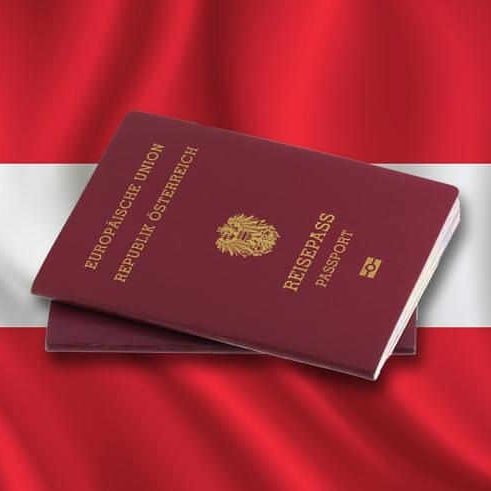
Territorial Profile & Integration Parameters
Austria is a member country of the EU since January 1, 1995 with its geographic size of 83,879 km², and population number 8,576,234, as per 2015. Austrians comprise 1.7% of the total EU population. Its capital is Vienna and the official language in Austria is German.
Austria's Gross Domestic Product (GDP) is €337.162 billion, as per 2015. The political system is a Federal Parliamentary Republic, and its currency is the Euro (€), since Austria became a member of the Eurozone on January 1, 1999.
Austria holds 18 seats in the European Parliament, while it held the revolving presidency of the Council of the EU twice, once in 1998 and in 2006. Austria is also a member of the Schengen Area since December 1, 2007.

Section 2.1 — Authorized Representation
INTERBEST INVESTMENT SRL is an authorized representative of all of the proposed investment programs, which means that unpleasant surprises with intermediaries and additional hidden fees are completely ruled out.
Client's personal participation in the process of collection, preparation and submission of documents for citizenship is reduced to a minimum. Meetings with company specialists, consultations and obtaining documents can be arranged in any country of the world. The operational offices are located in Austria, Malta, Spain, Romania, Italy, and Russia.
Section 2.2 — Family Reunification Parameters
Residence permit for family reunification (without the right to work) can be requested if your spouse has already received an Austrian residence permit as a researcher, an artist, a student, a replacement worker, or an exceptional employment case. This permit will not give you the right to work; you can only live in Austria as long as your spouse is allowed.
Section 2.3 — Business Trip & Special Permits
Before you go on a business trip, you need to get a special permit (residence permit) from AMS - the Austrian employment service. You will be granted a permit if you need a business trip for at least 3 months, you do not have a criminal record, and you did not violate the EU visa regime or enter a sham marriage.
Section 2.4 — Academic Registry Requirements
Mandatory filing criteria for dependent students include medical insurance from an Austrian agency provider, travel documents, photographs (35 × 45 mm), and clean criminal records for dependents over 14 years old. We recommend that you show at least €10,000 per each year of study reserved for the child.
In strict compliance with the transnational regulatory protocols synchronized across the 27 EU Member States, our global network implements secure administrative avenues for qualified international allocators and cross-border commercial branches. These customized residence and investment frameworks provide legal status card approvals, granting full liberties to operate commercial facilities, manage assets, and navigate borderless travel networks across the Schengen Zone registry.
Section 2.5 — Employment-Based Residence Permits
In order to work in Austria, you can get a temporary residence permit: the exact type depends on your profession, experience, and education. Each type of residence permit stipulates getting a special card:
- The right to work for a particular employer is granted by a Red-White-Red card and a Blue EU card.
- A Red-White-Red card plus gives the right for free access to the labor market.
N.B. Critical Day-Count Monitor:
Along with the residence card you commit yourself to live in Austria for at least 183 days a year. This is strictly monitored: if you don't have enough days, your residence permit will simply not be extended - you will have to leave.
Section 2.6 — Highly Qualified Workers Pathway
This residence permit can be obtained even if you have no job offer. First you get a special visa for 6 months to find a job position. If during this period you find a suitable position, you will get a Red-White-Red card (without any verification of the Austrian labor market). You will need to score more than 70 points inside the qualification registry.
Section 2.7 — The 70-Point Qualification Grid
Austria has a special system for calculating points; all factors may influence your approval parameters. General criteria specify that Austria is ready to accept only reliable citizens. You can apply if you do not have a criminal record, did not violate EU laws, or enter a sham marriage.
Point Allocation Benchmarks:
- Education Level: A Ph.D. or a doctoral degree automatically awards 40 points.
- Age Brackets: Applicants under 40 years old receive 15 points.
- Language Skills: Knowledge of German at an A2 level awards 10 points.
The minimum entry threshold for highly qualified workers is 70 points. Check parameters via the official online calculator.
Section 2.8 — Card Acquisition Processes
Your documents will be sent for consideration to the Austrian Employment Service (AMS) to check whether you have actually scored at least 70 points. After the verification, you will get visa D: it is valid for 6 months - during this time you must find work. Once you find a position, you provide the same package of documents plus a letter from the employer with a detailed job description to receive your Red-White-Red card valid for 1 year.
Section 2.9 — Key Workers Framework
You can obtain this type of permit to work in a particular company - after the Employment Service (AMS) makes sure that they have no suitable Austrian employee of the same qualification. This type of residence permit sounds as Rot-Weiß-Rot Karte (Red-White-Red card) in German.
Applicants for this type of residence permit in Austria need to score a certain number of points, and their salary must comply with the labor standards of Austria. General requirements dictate that Austria is ready to accept only reliable citizens without a criminal record, who did not violate the EU visa regime or enter a sham marriage.
Mandatory Age-Based Income Levels:
- If you are 29 or less: Not less than €2,430 a month.
- If you are 30 or older: Not less than €2,916 a month.
Section 2.10 — Point Thresholds & Processing
Qualification Target: Key workers must score at least 50 points in Austria. The special system for calculating points includes your age, work experience, level of education, and language skills. Check yourself via the official online calculator (in English or German).
When you submit the documents, they will be sent to AMS for verification. If it confirms everything is in order, you can apply for a residence permit. Most likely, the decision will be ready within a month. The maximum legal period is 3 months.
Section 2.11 — Skilled Workers in Shortage Occupations
This residence permit is issued for work in a particular company, if your profession is on the list of rare professions. The list is updated every year. Currently, it includes: Nurses, milling machine and lathe operators, roofers, technicians with specialized secondary education, and engineers with higher education in mechanical/electrical disciplines.
Applicants for this type of residence permit in Austria need to score at least 50 points, and their salary must comply with the labor regulations of Austria.
Section 2.12 — Residence Permit for Entrepreneurs
You can get this residence permit if a commission decides that your enterprise will be economically beneficial for the country: you attract foreign or domestic investment, you create new jobs, or introduce technological developments.
After obtaining a residence permit, you must stay in Austria for at least 183 days a year. Since the databases of the Finanzamt and the Magistrates were united in 2015, the physical fact of residence is closely monitored.
Section 2.13 — Educational Credentials & Sustenance Minimums
You need to confirm that you have the qualifications to run this business. A diploma of higher education / degrees are acceptable. For livelihood funds, the minimum monthly threshold is as follows:
- €823 per person a month
- €1,324 per married couple
- Plus €137 per dependent child
Section 2.14 — Step-by-Step Processing & Timelines
Step 1: Accommodation & Collection. Solve the accommodation issue by signing a rental/purchase agreement and arrange insurance. Collect identity files, clean criminal records, and bank statements.
Step 2: Translation. Documents must be translated by a court translator and bearing an apostille.
Step 3: Submission. Submit documents at the consulate. The AMS will study your business plan for three weeks, then send its decision directly to the migration service.
Section 2.15 — Year-Based Residence Extension Timelines
After 1 year: The permit is extended if the business plan is fulfilled. «Immigrant Invest» handles extension assistance for free.
After 2 years: If you have lived in Austria without interruption (or improved your German to A2 level), you can extend your permit for three years at once.
After 5 years: Apply for permanent residence. You will need a B1 German language certificate.
Section 2.16 — Austrian Residence for Wealthy Individuals
This option is suitable for those who are not going to work in Austria: it is implied that you have sources of income or significant savings outside the country. Minimum monthly threshold criteria follow:
- €1,766 per person a month
- €2,648 per married couple
- Plus €273 per each child
We recommend showing at least €80,000 for a family of three members. This permit is quota-based, and quotas are distributed within the first days of January; documents should be prepared before December.
Section 2.17 — German Language Level Benchmarks
You need at least the most basic level of German – A1, confirmed by a certificate not older than 12 months (Goethe-Institute, TELC GmbH, ÖSD, or ÖIF). Children under 14 or adults due to health conditions are exempted.
Section 2.18 — Official Consular Fee Matrix
Administrative processing costs must be settled via strict consular guidelines:
- €80 when submitting documents initially
- + €20 for card residence processing
- + €50 for each dependent child
- + €20 for photo and signature integration
Section 2.19 — Post-Move Settlement Essentials & Case Strategies
We work with you to plan your life after moving—bank accounts, driver's license conversion, and schools. We design strategic plans to work around quota bottlenecks: for instance, moving an applicant under highly qualified channels while processing separate family reunification files.
Our service contract requires a 50% advance deposit payment, after which we collect, certify, and apostille all core files.
Section 2.20 — Preliminary & Main Program Stages
The Austrian law states that review can take up to 3 months, but the process usually finishes in 1 month. We guide you through the Preliminary Stage (consultations by phone or face-to-face in Vienna/Moscow/St. Petersburg to develop an action plan) and the Main Stage (securing housing, formatting files, and obtaining final cards). One year of our support is free for all licensed applicants.
Section 2.21 — Macroeconomic Performance & Key Industries
Austria possesses a highly developed social market economy. Foreign direct investment serves as a primary driver, driving low unemployment (approx 4.7%) and strong GDP trends (€337.162B). The banking and transport systems are exceptionally lucrative; official records show that approximately 60% of the Total GDP comes directly from the banking sector.
Section 2.22 — Export Growth & Wealth Classifications
Sustained trade growth ensures high stability. Vienna has achieved ranking parameters placing it as the fifth richest region across all European territories, registering a value of approximately €38,632 per capita—surpassing London, Paris, and Rome. The government supports international arrivals with liberal FDI protection policies, including direct development grants or corporate premises subsidies.
Section 2.23 — Mobility Tariffs & Basic Company Registry Dues
Official registration parameters dictate specific, legally codified fees for foreign nationals processing capital integrations within the territory of Austria:
- Passport Dual Citizenship Processing Fee: €30,000
- Resident Work Permits Issuance: €10,000
- 5-Year Schengen Visa Allocation: €400
- Baseline Financial Investment Capital: €50,000
- Passport Investment (incl. Property/Business Min): €950,000
Section 2.24 — Corporate Setup Tariffs & Fiscal Baselines
To establish active business subsidiaries, the corporate registration process must fulfill specific upfront administrative tariffs and mandatory fiscal compliance rates:
- Interbest International Investment Fee: €3,500
- Standard Company Registration Setup: €3,000
- Physical Office Registration Dues: €350 / month
- Austria Value Added Tax (VAT): 20%
- Corporate / Income Tax Baseline Rate: 25%
Section 2.25 — Required Documents for First-Time Applicants
Filing Mandates: Submit both original and copies of all files. Original papers need an apostille or official diplomatic certification, and a certified translation is mandatory for all documents not in German. All persons older than six (6) years of age have to give their fingerprints when applying.
Dossier parameters require a completed application form, valid passport, birth certificate, 1 current biometric passport photo (3.5 x 4.5 cm), and civil status changes if applicable (marriage/divorce/adoption certificates).
Section 2.26 — Verification Certificates & Financial Proofs
Applicants must provide clear documentary verification confirming background records, housing arrangements, health insurance, and sustained capital parameters:
- Police Clearance Certificate: Must be issued from your country of origin and be no more than three (3) months old.
- Language Proficiency: Proof of A1 level German language skills (CEFR) not more than 12 months old.
- Legal Accommodation: Proof of legal entitlement to adequate accommodation in Austria (e.g. ownership contract, lease contract).
- Health Insurance: Proof of health insurance that is fully valid in Austria and covers all risks.
- Means of Subsistence: Proof of sufficient means of subsistence (e.g. income statement, employment contract, pension payments).
- Regular Expenditures Check: Current extract from the files of an officially recognised credit reference agency detailing rent, operating costs, child support, or loan repayments.
Section 2.27 — Required Renewal Extensions Checklist
To successfully maintain status within the territory of Austria, extensions require a completed application, valid passport, current biometric photo, and proof of A2 level German language skills (CEFR).
Proof of subsistence must include a current income extract or official confirmation issued directly by the Pension Insurance Agency (PVA), Regional Health Insurance Office (GKK), Tax Office, or the Public Employment Service (AMS).
⚠️ Critical Deadline Rule:
Applications for extension must be submitted in Austria before the currently valid residence permit expires.
Section 2.28 — Entry Routing & Consular Monetary Tariffs
Third-country nationals planning to stay for more than 6 months require a valid permit. Initial applications must be filed abroad and in person before entry. However, specific teams (e.g. visa-free entrants during their allowed stay, scientists and their families) may apply within Austria. Intercompany transfers ("ICT") must apply from abroad in all instances.
Consular cost payments must be made in US$ via postal money order or cashier's check (payable to the Consular office of Austria) or exact change money exclusively. Part of the consular fee is paid at the time of your application, and the rest at pickup in Austria.
If the applicant candidate is under the age of 18, the application must be signed by both parents or guardians and officially notarized by a notary public.
Section 2.29 — Specialized Category Files & Financial Liability
Category-specific tracks demand unique documentation bundles:
- Contract Workers: Job authorization released by the Austrian Employment Service (AMS), statement of wage or income, and verification letter issued by the employer.
- Self-Employed: Last earnings tax statement, contract letter, and a detailed business plan.
- Au-Pair Track: Authorized au-pair contract and a letter of qualification issued by the AMS.
✍️ Declaration of Financial Liability (Haftungserklärung):
Mandatory only if presence in Austria is funded by a person residing in Austria. This form is available exclusively in German and does not relate to au-pair candidates.
Section 2.30 — Language Accreditations & Integration Exemptions
Language diplomas must be publicly acknowledged (ÖSD, Goethe-Institut, Telc GmbH, or ÖIF) and not be older than one year. Specific individuals are legally exempt from providing language evidence: minors under-age at the time of application, individuals with psychological/physical illness verified by public health representatives, or family members of sponsors concern who held a valid RWR, Blue Card, or Daueraufenthalt-EG at first entry.
High-Tier Citizenship by Investment (Section 10 Paragraph 6): Applicants may bypass standard non-residence restrictions if they provide evidence of 'Remarkable Accomplishments' serving the national interest. This demands a minimum of 2 or 3 Million Euro Investment, representing the highest-tier price bracket among all European programs. Timelines can take up to 24 months to secure citizenship under this framework.
Section 2.31 — Interbest Global Concierge Advantages
Interbest Investment Group Worldwide offers comprehensive solution aspects as standard throughout your application process:
- • A specialized partnership supervisor as your single factor of call.
- • Full documentation preparation work, formatting, and file verification.
- • Direct authorized representation in your place prior to the Federal Government.
Premium family support vectors are readily available, and we are additionally in the strategic planning stages with the Federal Governments of Serbia and Bosnia for upcoming Citizenship Investment Programs.
Section 2.32 — Corporate Income Tax Minimums
Entities established through foreign direct investment are subject to standard fiscal regulations. The baseline corporate tax rate in Austria is fixed at 25%. In addition to the standard profit tax, corporate laws mandate a strict annual minimum corporate income tax:
- Limited Liability Company (GmbH): EUR 1,750 / year
- Joint Stock Company (AG): EUR 3,500 / year
Section 2.33 — Value Added Tax (VAT) System Breakdown
Austria's tax system employs specific VAT rates structured to support businesses and consumers across various economic sectors:
- 20% Standard Rate: All other taxable goods and services.
- 13% Reduced Rate: Domestic flights, entrance to sporting/cultural events, firewood, agricultural supplies, farm-produced wine, cut flowers.
- 10% Reduced Rate: Foodstuffs, take-away food, water supplies, pharmaceuticals, domestic road/rail transport, newspapers, books, cable TV.
- 0% Zero Rate: Intra-community and international transport, hotel accommodation.
Section 2.34 — Intracommunity VAT Identification Registry
For official commercial sales inside the European Community (EG), businesses require a fully verified, valid intra-community VAT identification number (Umsatzsteuer-Identifikationsnummer). If an invalid or incorrect number is provided, processing will halt under status "Die von Ihnen angegebene Ust.-Identifikationsnummer ist unrichtig." Immediate verification is mandatory to maintain compliant trade statuses.
Section 2.36 — Structural Layout of the Austrian UID Number
The Austrian federal state strictly regulates the specific numeric format and length parameters of its trade identification numbers:
• The entire identification code must consist of exactly nine (9) characters.
• The very first character prefix must always be an uppercase letter 'U'.